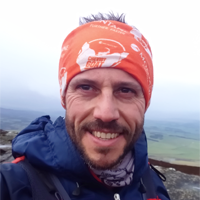
Discovering The Endurance Artist
It took a few emails to agree on a time and date for an interview, which was not easy with the time difference across the Atlantic, but I am sitting in my home office having a zoom call with Gary Cantrell (the race director most commonly known as Lazarus
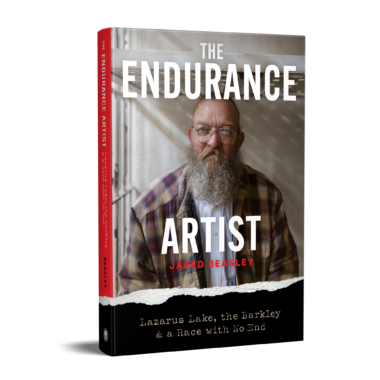
Lake or Laz) and Jared Beasley. Jared is the author of Laz’s biography “The Endurance Artist” and a few weeks ago I received a copy to write a review. I have followed Laz’s most known races for years, the Barkley’s marathons and many of the Back Yard Ultra races organised around the world, so I immersed myself in the book.
It really is beautifully written, and although I have read and watched everything related to those races, it had me hooked until the end.
It was brought to the general public by the documentary “The Race That Eats It’s Young”, but you may not have heard of the Barkley’s marathons. Barkley’s is the secretive race inspired by the prison escape of James Earl Ray from Brushy
Mountain Penitentiary Prison. The mountains and forests surrounding the prison are so steep and rough that after 54 hours, he was found only 8 miles away. Laz made fun of it saying that in that time he would have run 100 miles, and he created a race in the park where runners must complete 5 loops of about 20 miles, collecting pages from books that are scattered around the forest. Considered by many the hardest footrace in the world, the course has only been completed 26 times by 20 runners since 1995. The Backyard Ultra could not be more simple in contrast. Runners must complete a loop of 4.16 miles every hour starting on the hour, until there is only one runner left. The world record was set by Phil Gore at 119 laps or yards, 495.8 miles. I will let that sink in for a second. Laz has allowed race directors to organize Backyard Ultra Races around the world, and the best of each nation are invited to run the world’s final organised in his home in Tennessee.
Laz on Age, Health, and 3,000 Miles a Year
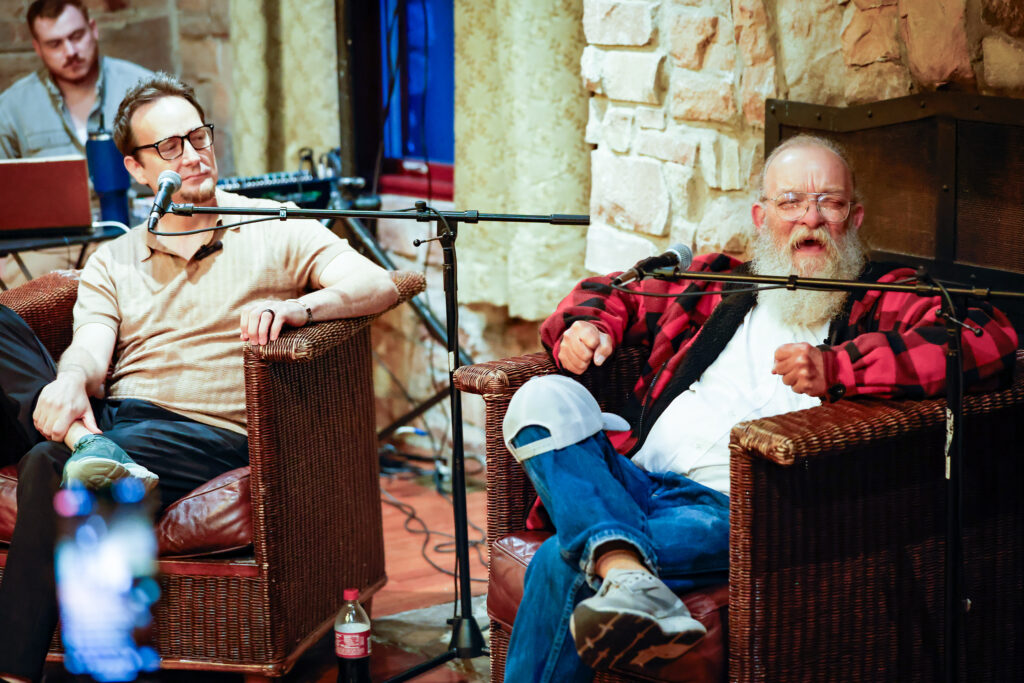
Back to our Zoom call, Gary is looking fresh and seems to be in a good mood. He is wearing a white shirt, and smiles continuously. His image is a bit blurred, like out of focus. He is just back from his walk, he says he is very close to do 3000 miles this year, and that will make 20 years that he has achieved that target. That is really good for being in his early seventies. I am glad he is doing so well because he has had some health problems in the last few years. Jared has a smart casual professional look and is really friendly, cracking jokes with Laz and me. I tell Jared how much I
enjoyed the book and how I love its structure, with different layers where Jared describes the life of Laz, the different races and how the idea of the races came along. Jared just jokes. “Laz is a pretty boring subject, and his races are kind of pretty flat with not a lot going on so I had to do my best to create these layers just to
try to make it interesting.”
How the Biography Came to Life
Laz’s life is nothing but boring, just considering that his races have changed the rules of ultrarunning. And the book reveals as well a life far from conventional. But Laz is quite a private person, so I asked them how the idea of the book came along and if Laz agreed to it straight away. Laz starts saying he couldn’t imagine why anyone would want to write or read a book about him.
“When Jared asked me about it, in the discussion, he said he wouldn’t do it unless he got an actual publisher. So I felt like it was safe to say, yeah, if you get a publisher, I’ll do it. And then when he called back and said he had a publisher, I was kind of stuck. Then I did not know if he would find enough interesting material for a book. But a skilled writer can make a boring life, I guess, sound interesting.”
When I remind Laz that his life is nothing like boring he just says “I’ve spent my life coloring outside the lines.” which is probably the best phrase to define his life.
Testing People — On and Off the Trail
In the first part of the book Jared explains how he struggled to get a press pass to cover the Barkley’s marathon. I really enjoyed the story of how instead of a press pass, he got an entry to run a Backyard Ultra and a maths problem. I asked Laz what his intention was there, did he want to test Jared to see if it was worth giving him the press pass?
“I just thought he would have a good time. When he first asked for a press pass for Barkley and didn’t get it. It’s because we get way more requests that have space. So if you come in late then you’re probably not going to get one. It has to be applied for earlier. I thought he would have fun running the race. And the math problem was just that he talked to me that day after I’d just figured out how to work it in my head. And I thought he would have a good time with it.”
Jared added to it “The real truth I came to learn about Laz there is that he really is testing everybody that comes into his sphere all the time. It wasn’t just testing me. It could be the waiter at his favorite Mexican restaurant on how they could improve their mile splits in their marathon, or why they need to come to the Barkley Fall
Classic. It’s everyone, everyone all the time.”
The Barkley Fall Classic: A Human Experiment
The races of Laz feel somehow like a human experiment, where he just puts an event to see what is going to happen. Are they going to make it, how far are they going to go? I just find it fascinating that he creates these fantastic challenges, but also that people come along and have a go at it. When I mention this Jared told us this story from a recent race, the Barkley Fall Classic. This is seen as an easier version of Barkley up to the general public.
“Well, there was a lady at the Barkley Fall Classic this year that was missing a toe. And she was taking great pride in the fact that she was missing this toe and showing it to all of us. And this was actually at the point of no return in the Barkley Fall Classic, where you could take a left and only fail with a marathon, or you could decide to go up four of the nastiest climbs he had waiting for you to try to get the full 50k. And so you were seeing, out of 400 runners, I think 20 finished. And this is the most accessible of anything related to the Barkley. And seeing his demeanor and the
signs that he has laid out there with all kinds– in many different languages, by the way– but with all kinds of ideas. You come to the conclusion that he and the people around him have been having way too much fun with this for way too long.”
Laz also talked about the same race:
“You never fail to continue to learn new things about people and how their minds work. And this year’s Fall Classic because of where we had to relocate, which limited our course. And they ended up doing the same loop twice at the end with just one other climb in between. And people talk themselves out of finishing. by doing faulty math in their head. They’d say it took me X length of time to do the loop the first time. So when I, but to do that other climb and the loop again, I just can’t finish in time. And they quit in the droves and went to the marathon finishing with time still left on the cutoff.
But the ones that went on finished. Not, not a hundred percent, but most unfinished because everyone thought I would run it the second time slower than the first, but that’s not really true. You’ll run the second one faster because it’s the last one. It’s mentally different to run something in the middle of the race or to run it when this is it. And that kind of applies to the Barkley. Virtually every person who’s ever finished the Barkley had to run loop five faster than loop four.
It’s just not a straight mathematical progression. There’s the ups and downs that occur, but people always picture the trajectory as just being an unbroken line. And so if they’re in one of the down curves, they project themselves just plummeting off the face of the earth. If they’re in an upswing, you think you’re just going to fly to the finish. And they’re neither one true. It just goes in waves.”
Vol State and the Psychology of Quitting
Laz brought up another example of how his race planning involves playing with the mind of the runners. The Vol State Race is a less known event from Laz that runs 314 miles from Missouri to Northeast Georgia.
“The Vol State works that way. The bus ride, when we load up a bunch of people who dropped, we drive them to their car at the finish line. We drive up through the field so we can check on all the runners and also to let them look out the window and see. And so those bus rides are really, really quiet. Because the people are looking out the window and seeing these other people struggling, just baking in the heat and broiling in the sun and limping in it and hurt. And they realize the only difference between me and them is that I quit.”
Jared also told a story of how Laz supports the football club of their local school. Although their opponents seemed far stronger, in the presence of Laz they held the line against them.
“I think Laz will blush over and would never admit it. But I think when you’re getting support from somebody that puts on such extreme endurance challenges, it can’t help but motivate you to be a better player. Because those kids were playing their hearts out. I mean, it looked like just that one kid was going to run over them the entire night.”
Community and Competition in the Backyard Ultra
Something that I find also very interesting in these events is that, on top of the extreme athletic performance of the runners, there is also the will to work together to help each other to get further. I brought the example of Sarah Perry, who was in the latest Big’s Backyard Ultra. She mentioned how the atmosphere was amazing and how people were helping her partner because they realized that he was on his own supporting her. Laz thinks it’s the best part of Backyard.
“In every sport, you cannot be better than the people you compete against.
If a team schedules all weak opponents, they’ll never really be that good. They’ll just be better than the weak opponents. But backyard is the only sport where it’s written into the rules. So if you, if anyone wants to do that, well, they need everyone to do well. And so you see, it’s really a nice atmosphere where everyone helps each other.
And in the end, everyone wants to win, but they also want to do well. So everybody pulls together till you get down to just a couple of three and then the mind games start.”
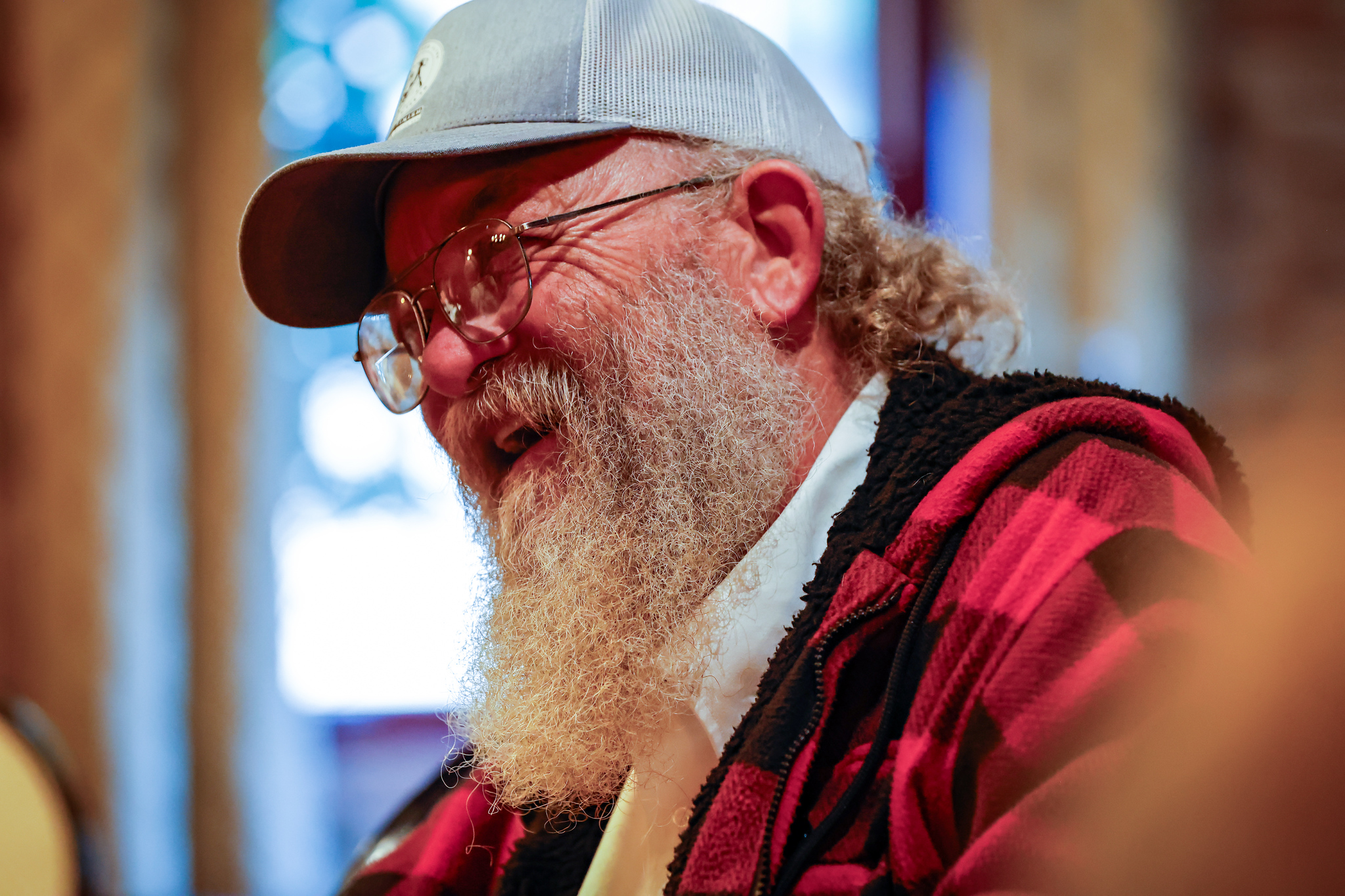
Photos courtesy 8020books.com
Laz brought his memory of the latest Backyard Ultra final, where the last runners were Ivo Steyaert from Belgium, and Phil Gore from Australia.
“…we still had the last lap, this time it was Phil Gore and Ivo who started. And Ivo had the lean for days. And he said he was at the end. And just as an automatic reflex action, Phil said, you can do one more. And then he took him by the hand and they went out together and they did a final lap together. Phil then ran the final lap to win, and it really, it was a nice way for the race to finish.”
It was not just a nice way to finish the race, after 114 hours of competition Phil Gore went to finish his last yard in less than 40 minutes. I could not believe how much he had been keeping in the tank, and how many extra hours he could have done.
About this, Laz came out with more words of wisdom that give you an idea of why he puts his events.
“People really don’t realize your body will do as much as your mind demands of it. But we don’t very often have the opportunity to demand that much of ourselves. And when you’re able to make yourself go beyond what you think you can do, it’s really a satisfying feeling. And that’s the thing the races are designed to give people, to come away thinking, I can’t believe I did that. We want people to be their own hero.”
When Humanity Beats Ego
Jared mentioned cases in the Backyard ultra when runners pull a competitor into the race so that they are not disqualified. They could leave them to fail and have a competitor less to deal with but as he said “It’s still amazing to see when someone’s humanity kind of overcomes their ego. And I don’t think that that’s entirely conscious… Because when you’ve been running with basically no sleep for three or four days, the damnedest things happen. And they tend to be pretty human and humanizing.”
The Brutal Reality of the Barkley Course
Something I find fascinating about Barclay’s is how hard it is. Laz has created a race with a route and a number of variables that only a very selected number of runners are able to complete within the allocated time. For me that route is a masterpiece.
While I mentioned this our internet connection was disrupted and in the confusion Laz got talking about the selection process to enter the race. It requires sending an email with an essay detailing why you want to enter the race, but first you need to find out the email address where to send your application.
“I get email requests pretty much daily. Can you tell me how to enter? Well, that’s not how you figure it out. I can’t just say, everyone will be mad if I just start telling people.
When the drawing takes place, it takes a week or more to get it all done by reading the essays and sorting them into piles and then drawing the entrance and drawing the people on the wait list. And you take the essays and separate them out into the ones that deserve to be in the race. Every one of them, you’d like to put them in. But
when you get done, you’ve drawn the 40 starters and the 50 people on the wait list, and there’s still enough runners left over to make four more fields.”
I tell Laz that I have a few friends that have attempted Barkley so I have an idea of how difficult it is. I think you have to be really good to just finish one lap. Getting to do three laps (known as a fun run) is a real achievement and completing 5 is at the reach of very few runners. I guess many people are not conscious when they apply for it.
“The first thing, when someone that’s never been there applies, they always say, I’m not sure I can do the 100, but I’m sure I could do a fun run. The same person, when they time out on the first loop, said, “I knew it would be bad, but I had no idea it was possible to be this bad.”
Jared added “It’s that bad. Part of the goal with the book was to attempt to put the reader into the race a bit because you’re not allowed out onto the course as the media. The documentaries do a great job of a lot of things, but they can’t really show you what that terrain is like, what the place is like, what it’s like there, what it takes, to make one loop. It’s incredibly steep, incredibly gnarly. And so one of the goals with the book was to try to show some of that from the runner’s perspectives, to try to make it fragmented, make it uncertain, because everything in the race is uncertain, to follow these different perspectives. And so we can see not only what’s going on in camp, what’s going on with Laz, what’s going on with John Kelly, what’s going on with Jasmine or Aurelien Sanchez or something like that. And you had mentioned layers earlier. That was part of it, is that these events are really complex endeavors,
even though the backyard is so uber simple. But it evolves or devolves into something that’s extraordinarily complex in that everyone’s tied for the lead until they’re out. Speed kills. Something that I was trying to get from Laz and from other people is to bring more perspective to these events.”
I agree with Jared that the book does capture the race really well. And he also introduces a lot of the characters of the race, of the history of Barclays. A lot of the different people that have participated over the years, some of them so devout to the race that have their ashes scattered in the park. People like Stu Gleeman who as Jared explains, “is not someone you’re going to read about in an ultra running magazine or anything like that. Not spectacular runners, but devout when it comes to what the race and what Laz is trying to do.”
Jared explained further his intention when writing the book:
“Another goal of the book was to kind of slice away at some of the misconceptions around Laz in his world and his creations. And one misconception is that his races are only for the uber elite people, the only, the best runners in the world. And that’s not really the case. He has so many different creations that require different skills. In the Vol State, there are people that see that 314 mile run that aren’t runners. They don’t run, but they get captivated by watching these vagabonds slog by year after year and they say, I want to do that. And then they do, not even being runners. And that’s really I think another one of his talents, besides just keeping a race like the Barkley in that 1% range, it’s also creating a plethora of events for all skill levels of people.”
Wrapping Up With Laz and Jared
Our call came to an abrupt end when we used the 40 minutes that Zoom provides for free. I could have talked way longer with Jared and Laz but I was wary of taking too much of their time. I was very pleased that our chat covered so many topics, not just about Laz’s biography but also of the universe of his races and the ethos behind them. I want to thank them again for their time.
Excerpt From The Endurance Artist
Excerpted with permission of 80/20 Publishing from The Endurance Artist: Lazarus Lake, the Barkley, and a Race with No End by Jared Beasley.
The Barkley Marathon and Its Assorted Life-Threatening Injuries
July 3, 2025
Jared Beasley
Adapted from Chapter 1 of The Endurance Artist by Jared Beasley. In The Endurance Artist, author and journalist Jared Beasley embeds himself in the backwoods culture of the Barkley Marathons and Big’s Backyard Ultra to shine light on their elusive race director, the man known as Lazarus Lake. The first biography authorized by Laz himself, The Endurance Artist offers runners an unprecedented, fascinating, insider view into the man behind ultrarunning’s most feared and revered races. Through full access, personal interviews with Gary Cantrell and his inner circle, Beasley reveals how this iconoclastic innovator has upended beliefs about human endurance, failure, and redemption—and pushed the world’s toughest runners to new limits.
FOR OVER A CENTURY, Brushy Mountain State Penitentiary was the end of the line. Built in the shape of a Greek cross, the pale limestone structure had housed the worst of the worst—murderers, madmen, monsters. It sat hunched beneath a crown of scarred mountains the guards called the Fifth Wall—in an area so remote, so rugged, the Civilian Conservation Corps lost four men building trails here in the 1930s. Eventually, they abandoned their field office due to an infestation of rattlesnakes. Snakes the locals said were “as thick as a man’s arm.”
Now it stands empty—cracking and molding and dying. But each spring around April Fool’s, on a cold, crisp day like today, a retired accountant appears at its gate. He carries a book with an ominous title and plants it against the back wall. Then sometime between midnight and noon the next day, he lights a cigarette, and the world’s most grueling footrace begins.
Meet Lazarus Lake (aka Gary Cantrell), Creator of The Barkley Marathons
He came at dawn, in a large U-Haul coughing diesel smoke into the Tennessee frost. After crawling out, he leaned on a cattle prod and lit a cigarette in front of the prison gate. He wore faded flannel, red-and black checked, and a bright sock hat that said Geezer. The rest of him was almost deceptive: a tangly grey beard, perfectly manicured nails, and eyes like two-way mirrors—they observed everything and revealed nothing.
To some he is Lazarus Lake. To others “the Leonardo da Vinci of Pain.” His Social Security comes to Gary Cantrell. Most call him Laz.
He looked on while a grey truck pulled up to the gate and sat gurgling. When I mentioned the polarizing attitudes toward his race creations, he just shrugged. “Most people think fair is what’s best for them. The purpose of a challenge is to find differences. If you don’t fail,” he said on a long sigh of cigarette smoke, “how will you know how far you can go?”
A young man climbed out, gave us a nod, and worked the lock with a hoop of keys. They rattled against the metal gate until the whole thing, all two stories of it, screeched and unfolded like a zipper.
Laz got back in his vehicle without a word. I followed.
Outside my frosty car window, the mountains loomed up to a series of tall ridges, dull like the color of deer in winter. They were strewn with jeep roads and blown-down timber. You had to think— forty of the world’s toughest against mountains the Cherokee deemed too inhospitable to mess with.
The U-Haul circled a parking lot the size of a football field before lumbering to a halt in a puff of exhaust. Laz leaned against the front fender and began to piss. It steamed and splattered till it formed a dark patch on the concrete. I looked away, shaking my head at the fact that it was now 2023, and I’d spent the past year convincing The New York Times to let me profile him. “I do two things well,” I heard him say behind me. “I sleep well, and I piss well.”
I was beginning to wonder if I’d wind up like the rest. Outside magazine had tried to do a deep dive on him but were flummoxed when he told them, “Wrong information out there is OK. It just makes the truth harder to find.” When Red Bull’s writers asked how he started running, he answered “with my left foot” before launching into a lecture on Osage oranges and wild bear fatalities.
One rumor has it that he’d been shot in a marathon. Another that he’d pulled his own teeth. Many are convinced he’s diabolical, a man who breaks people for the fun of it. Others see a “bearded saint” who pushes limit-seekers in a way that borders on genius. But most agree his ultramarathons defy convention.
“This Weird Stuff”: How to Enter the Barkley
“There’s ultrarunning,” one runner remarked, “then there’s this weird stuff.” Tour buses, ferry rides, conch shells, a chair of honor called a “thrown,” races with no finish lines, races where older runners beat the pants off competitors half their age—Lazarus Lake filled a gap few realized needed filling. But it was here he first flipped the sport on its head—at least, it is believed—with the Barkley Marathons. It started with how to get in. If you belonged here, you’d find out how to get here, he’d say. And getting here meant finding an email address, sending an application to Idiot, including $1.60, and writing an essay on why he should allow you in.
According to longtime Barkley fixture Frozen Ed, in his book Tales From Out There, “The Barkley entry application form is usually a joke in itself.” He recalled having to give his age in non-Earth planetary years on a form that began, “Start making excuses.” If chosen, Laz sent you scrambling above the prison through briar-laced thickets—to find the books he set out in the wilderness—with no course markers, no aid stations, no tracking devices.
Stories of the depleted souls who stumbled back to camp were legend. Shredded legs. Separated clavicles. Exposed kneecaps. One runner was close to finishing but turned back at a mad flow of mountain water. “If I cross,” he told himself, “they will be finding my body.” Another runner hopped 20 miles on a broken ankle just to get to a place where he could quit. The few who triumphed here were names whispered over cookfires with awe and an almost alien reverence. In the last five years no one had even finished the Barkley. In its 36-year history, only 15 ever had.
The Rules of the Barkley Marathons
I trailed Laz toward the back of the prison, where he limped past a ditch, a towering wall of sandstone, and stopped at a conjunction of metal pipes. He produced the book, Last Will and Testament, and with little fanfare duct-taped it to the center.
To prove you’d run his course, he had you bring back a page from each book, thirteen this year. The order of the books formed one loop—five loops total—sixty hours to finish. “Sixty hours of Hell,” wrote one magazine. He added sections to the Barkley every year, mostly off-trail, yet the distance somehow remained 100 miles. Those in the know say it’s nothing short of 125. Not knowing, Laz maintains, is part of the fun.
He also doesn’t allow pacers—“that’s cheating”—and if you get lost, no one’s coming for you—for at least thirty hours. He wants you alone against all that Out There. “If you’re going to face a challenge,” he once told a documentarian, “it has to be a real challenge.”
The Barkley Course and Its Terrain
After lighting another cigarette, he moved to a break in the earth where a swollen stream barreled into a tunnel beneath the prison. Naturally, he sent the runners through it. At night, they reported hearing radios, television sets, even voices calling their names. They swore they were being watched, though no one ever mentioned by whom.
“They’ll come up through here,” Laz said with some glee and pointed to a shaft lined with slick, glistening stones. Getting up or down would require a chimney climb, wedging feet and arms against opposing walls. “Then, they’ll head up that,” he said and gestured with his cattle prod to a sheer wall of Tennessee jungle.
The slope didn’t rise, it lunged at the sky—sixty degrees of winter-stripped trees so densely pushed together they seemed to fight each other for air. There was a flare in Laz’s eyes as he studied it. “We call that The Bad Thing.”
The cliffs here bound up so steep that a deer once tumbled off and into the prison yard. The inmates kept it and named it “Geronimo.” It became one of the boys, a guide told me, and claimed he could still hear its footsteps. “The whole place is haunted,” he said, his voice dropping. He described the six-by-six dungeon, the hooks where they’d hang inmates by their thumbs, and the mines in the mountains where hundreds were buried alive. When they collapsed, the guards would just leave them. “No, no,” he said, shaking his ball-cap-covered head. “This is not a good place. And I don’t do night tours.”
“Jesus, you’d need a rope,” I whispered, craning my neck up at The Bad Thing.
A thick, congested laugh burrowed up from Laz’s chest. “Aw hell,” he said. “That’s just the first pitch.”
Most big trail races have a monster, that one signature, gut-sucking climb. At the Barkley, there are a dozen, each loop, and The Bad Thing isn’t even one of the worst. The total elevation gain soars over 68,000 feet, roughly two Everests and a Kilimanjaro—from sea level. Many of the climbs are littered with long thatches of briars—the kind country people used to call “wait-a-minutes” because it wasn’t until you got a step past them that you realized you’d been snagged.
“God, one wrong move and you’d come down it alright, like a bowling ball,” I thought but actually said out loud.
“Oh, you’d smack into a tree long before you hit the bottom,” said Laz, without a hitch. “It’d mess you up a bit. But you’d live.” He laughed till he groaned, then stilled for a moment before fixing his eyes on me. “Failure has to hurt.”
I let that roll over in my head for a moment. “Doesn’t it usually?”
He didn’t respond to that but scanned the hillside with his large green eyes. “What makes people quit?” he said, blowing a long column of smoke back toward the prison. “Everybody is born a quitter. It’s the default setting. Hell, even fish quit! You can put ’em in an artificial stream with a fake scene, and they’ll swim upstream as long as it looks like they’re moving. But make it stationary, and they’ll quit and go with the water.”
He turned to head back to the parking lot but paused. “Life can be a damn good metaphor for sports,” he said. “Adapt or die.”
The U-Haul was moving again, this time along a tight patch of pavement deep inside Frozen Head State Park. The road curved and rolled into a tunnel of trees toward the trailhead. There, the next phase of the Barkley would begin, checking in those Laz had called at various times penitents, fools, and sickos.
The farther we went, the more the forest seemed to want its space back—dark patches of moss slowly overtook the road and boulders crowded the edges. Laz liked to talk about the park’s mercurial micro climate, how the air compressed through the gaps like a thumb held over a garden hose. Temperatures could swing from 80 to 15 degrees in a single loop. “First-timers think it’s hyperbole,” he said, “but you only have to get caught by it once.”
Soon, the bars on my phone dwindled to an x, and the road began to climb. Finally, a smudge of yellow appeared ahead and became a gate. Set between two stone pillars, this flaking pole was where the ordeal would begin and end. Here, Taps would play on a squeaky bugle for the fallen. Like most things in Frozen Head, one got the sense it was sentient. A cracked sign adorned its middle: “Do Not Block Gate.”
The Start Line
By early afternoon, the ritual check-in was underway. A line of forty trail runners twisted up to a large white tarp, a virtual who’s who of ultrarunning. The veterans carried items for Laz that he was in need of: cigarettes, socks, shirts. The virgins (first-timers) produced license plates from their home states and countries. Hundreds of these plates hung from yellow ropes strung between the trees—a dangling gallery of far-flung places like Liberia, South Africa, Australia, Antarctica.
There were also unfamiliar faces in line, wide-eyed and wrapped in weather-faded gear. They stood quietly, taking it all in. Every so often, one would lean forward for a glimpse of Laz. You got the sense they weren’t here for the mountains. Not even the pain. They were here for him—for Laz and his gate and his cigarette, daring them to come undone.
His gravelly laugh echoed through the trees from behind a picnic table, where he greeted the entrants. “We look forward to seeing you suffer,” he said to one, before “You might as well go ahead and hit your head on a rock” to another. The runners and crews got green and blue wristbands. The media got pink.
“Any advice?” a runner asked.
“Go home,” Laz laughed and handed him this year’s shirt.
While most race swag is fairly standard fare, this shirt boasted an illustration of a runner, terror etched across his face as he dashed up a tree. A monstrous black bear was charging him from behind, while above, a cougar crouched on a limb, ready to pounce. At the bottom was this year’s theme—The worst-case scenario is just the starting point!
After the last runner checked in, they studied the master map. Laz made one of the course each year, and once it was set out, the runners and crews did their best to copy it by hand. They were also given a creatively useless set of instructions. “If the trail you see appears to be too steep to go down,” Laz wrote one year, “then it is probably the right trail.” Even the veterans got lost. One runner was heard to say, “I’m not sure where I was, but it was hard as hell to get to.”
Later in the night, there’d be a chicken dinner and, some years, a birthday cake with “Good Luck, Morons!” written in icing. But when the race would actually start, only Laz knew. Sometime in the next twelve hours, he’d blow a conch shell. If you heard it, you had one hour. If you missed it—and someone always did—you were shit out of luck. Secrecy in all things was absolute; no one outside the camp—save close family members—even knew we were here.
Oh, you don’t run the Barkley.
Suddenly chilled by a damp breeze, I made my way back toward my SUV but bumped into Johan Steene. The Swedish ultrarunner was a magnificent sight—long brown hair pulled back into a ponytail, a kind, angular face, and a gentle nature that was easy to read. Whether floating over gnarled roots, rutted mud, or fields of scree in Oman, Steene made technical trails look effortless. The Barkley? Four starts and zero finishes. “I’m excited to finally see you run,” I said when we shook hands.
“Oh, you don’t run the Barkley,” he said in a melodic lilt and smiled. When he stepped away, I noticed a laminated sign I could’ve sworn was not there before. It was taped to a pole with words written in black magic marker. MEDICAL, it read, for instances of DEATH, near-dying, and other assorted life-threatening injuries. Below was a phone number.
I revved the engine of my rental, held my numbed hands over the vents, and thought about something ultra-phenom Courtney Dauwalter had told me. She managed only one loop here but insisted Laz didn’t want to torture people. One of the greatest ultrarunners of all time, she still felt awkward meeting him at first, not sure if it was a handshake situation or a hug situation. “He’s really kind,” she said, and found “he makes these crazy-hard events because he thinks we all have more than we think is possible.”
Just as I was beginning to get my head around all this and feel my fingers again, the weather shifted. The clouds darkened, and a blistering wind came barreling off the mountains. It whipped and tossed the trees. It was like an unseen hand had pulled a lever. The temperature plummeted, then sleet began to thud off tarps, tents, and scrambling runners.
I spotted Laz by the license plates, gazing up at the sky and sipping a chilled can of Dr. Pepper, a Tennessee license plate swinging in the wind beside him.
Its bolded letters read SURVIVE.
Further Reading:
The Endurance Artist by Jared Beasley The Endurance Artist Book review by Antonio Codina
← Back to Issue Ultrarunning World Magazine 41 Overview